
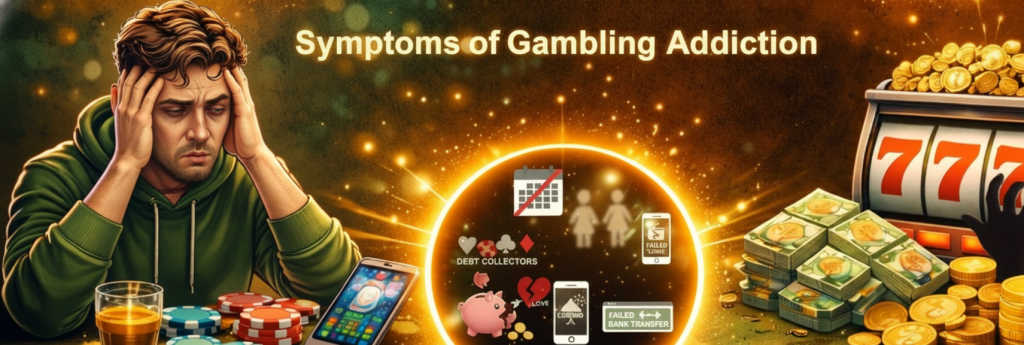
Symptoms of Gambling Addiction
Signs that a loved one may have a problem:
Gambling addiction often develops gradually, making it difficult to recognise until the impact becomes serious. One of the earliest signs is loss of control, gambling for longer periods or spending more money than originally planned, even after repeated attempts to stop or cut back. This is often accompanied by a constant preoccupation with gambling, such as thinking about past bets, planning the next session, or reliving wins and losses.
Another common symptom is chasing losses. Instead of stopping after losing money, individuals feel compelled to continue gambling in an attempt to “win it back,” which usually leads to deeper financial harm. Over time, this behaviour can result in financial stress, including mounting debts, unpaid bills, borrowing money, or selling personal belongings to fund gambling.
Gambling addiction also affects emotional and mental health. People may experience irritability, restlessness, anxiety, or low mood when they are unable to gamble. Feelings of guilt, shame, or secrecy are common, leading many to lie to family members or hide the extent of their gambling. Relationships often suffer as trust breaks down and communication decreases.
As the addiction progresses, gambling may begin to interfere with work, studies, or daily responsibilities. Missed deadlines, reduced performance, or absenteeism can occur as gambling takes priority over important commitments. Some individuals may use gambling as a way to escape from stress, loneliness, boredom, or emotional pain, creating a cycle where emotional distress fuels gambling, and gambling increases distress.
Recognising these symptoms early is crucial. Gambling addiction is not a failure of willpower; it is a behavioural condition that can be addressed with the right support, tools, and understanding. Seeking help early can prevent long-term financial, emotional, and relational damage and open the door to recovery.
- Does your loved one become defensive or embarrassed when you ask them about gambling? Do they make excuses or lie about where they have been or how much money they have spent?
- Does your loved one try and make out that they are gambling to provide a future for you and the rest of the family? Do they try to blame you for their gambling habit? Are they disillusioned about gambling – do they think the big win is just around the corner?
- Are they spending long periods of time away from the family home? Do they become tense or frustrated when you ask where they have been?
- Are they becoming increasingly secretive about money? Do they hide bank statements or leave them unopened?
- Have you noticed valuable possessions or cash disappearing? Have you noticed that credit card statements have increased?
Signs that a loved one may have a problem:
- Are you constantly thinking about gambling?
- Are you always trying to find ways to get money for gambling?
- Do you lie to hide the fact that you have been gambling?
- Have friends and family started to question you about your gambling habits?
- Have you lost control of your gambling habit and started borrowing or stealing money?
- Do you gamble even when you don’t have any money left?
- Do you try and convince yourself that you do not have a gambling problem?
- Gambling is highly addictive and a small-scale, casual habit can soon develop into a full-blown addiction. If you start to notice any of these signs and symptoms, you should consider getting help before your problems spiral out of control.