
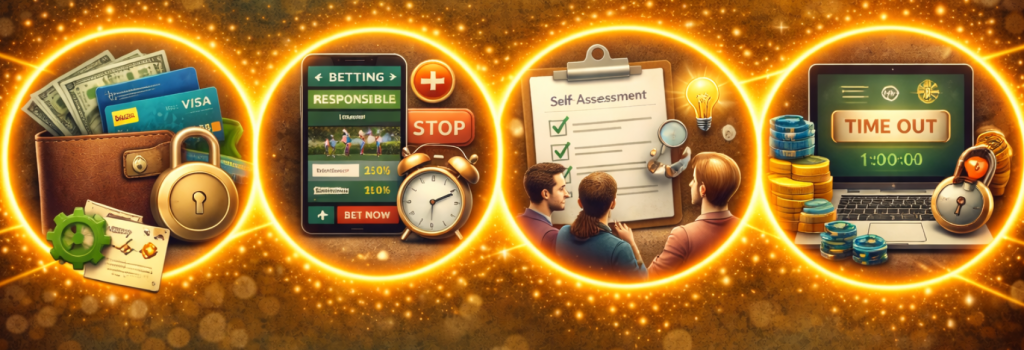
Responsible Gambling Tools & Self-Assessment Guide
- Home
- /
- Responsible Gambling
Deposit & Spending Limits
Know your limits before gambling controls you
This guide helps users understand how setting daily, weekly, or monthly spending limits can prevent financial harm.
We explain:
Why limits work psychologically
- Limits create a pause between impulse and action
- They reduce emotional decision-making during wins or losses
- Pre-set boundaries shift control back to you, not the game
- They prevent “chasing losses,” one of the biggest risk behaviours
When limits are decided before you gamble, they’re far more effective than decisions made in the heat of the moment.
Signs you may need stricter limits
You may need tighter controls if:
- You regularly increase limits “just this once”
- Gambling money overlaps with rent, bills, or savings
- You feel anxious or restless when you can’t deposit more
- You gamble longer or spend more after losses
- You hide or minimise gambling spend from others
These are signals not failures.
What to do if you keep overriding limits
If limits aren’t holding:
- Switch from daily to weekly or monthly limits
- Add cool-off periods between deposits
- Use time-outs or self-exclusion tools
- Ask someone you trust to help you stay accountable
- Consider speaking to a professional — early help works best
Overriding limits is a sign to add protection, not remove it.
How to rebuild healthy money habits
- Separate gambling money from essential finances
- Track every deposit honestly — no rounding down
- Set spending limits lower than what feels “comfortable”
- Replace gambling time with low-cost activities that still give a reward
Progress is about consistency, not perfection.
Self-Check Worksheet: Spending Awareness
Take a moment to answer honestly:
Money & Limits
- Do I know exactly how much I spent gambling last month?
☐ Yes ☐ No - Have I ever increased a limit because I felt emotional?
☐ Yes ☐ No - Have I gambled with money meant for essentials?
☐ Yes ☐ No
Behaviour & Feelings
- Do I feel irritated or stressed when I hit my limit?
☐ Yes ☐ No - Do I gamble longer after losses?
☐ Yes ☐ No - Do I downplay my spending when asked?
☐ Yes ☐ No
Reflection
- Am I fully in control of my gambling spend right now?
☐ Yes ☐ Unsure ☐ No - Would stricter limits reduce stress in my life?
☐ Yes ☐ Maybe ☐ No
If you answered “Yes” or “Unsure” to multiple questions, it may be time to strengthen your limits or explore additional support.
Reality Checks
Pause. Reflect. Decide consciously.
Reality checks encourage users to pause at set intervals and reflect on:
- Time spent gambling
- Money won vs lost
- Emotional state while playing
Gambling problems often develop not because of a lack of intelligence or discipline, but because of dissociation; a mental state where time, money, and consequences fade into the background. During extended gambling sessions, players can slip into an automatic, trance-like mode driven by impulse rather than conscious choice.
Regular interruptions are designed to break this cycle.
By pausing play at set intervals, these interruptions gently pull attention back to the present moment. They create space for reflection, allowing players to reconnect with reality — how long they’ve been playing, how much they’ve spent, and how they’re feeling emotionally.
How Interruptions Reduce Harm
Interruptions work because they:
- Disrupt emotional momentum that fuels chasing losses
- Reduce impulsive decision-making triggered by near-misses or wins
- Re-engage rational thinking, which is suppressed during dissociation
- Restore a sense of control, reminding players that stopping is always an option
Even brief pauses can significantly lower the intensity of urges and help prevent sessions from escalating beyond intended limits.
Time-Outs
Short breaks can prevent long-term damage
Time-outs allow users to take a temporary break from gambling activity.
Time-outs allow users to take a temporary, voluntary break from gambling activity — typically ranging from 24 hours to several days. While they may seem simple, these short pauses can be powerful in interrupting impulsive behaviour before it escalates into harm.
When someone is gambling intensely, decision-making is often driven by emotion rather than logic. A time-out creates space to cool down, regain perspective, and step away from the immediate urge to chase losses or keep playing “just a bit longer.”
Time-outs are especially useful if you notice warning signs such as gambling longer than planned, feeling restless when not gambling, or making decisions you later regret. Unlike self-exclusion, they are low-commitment and reversible, making them a practical first step for people who want to regain control without feeling overwhelmed.
Used regularly, time-outs can help rebuild healthier habits by reminding you that gambling should never feel compulsory. Taking a break is not a failure; it’s an act of self-control.
Self-Exclusion
When stepping away is the healthiest choice
Self-exclusion is a stronger protective step that blocks access to gambling platforms for a longer, defined period. It’s often recommended when gambling begins to affect finances, mental health, relationships, or daily responsibilities.
Choosing self-exclusion is not a failure; it’s an act of self-awareness and self-care. By removing temptation entirely, it creates the breathing room needed to recover, rebuild trust with yourself, and seek support if required.
My Gambling Activity Dashboard (Awareness Guide)
Seeing the truth changes behaviour
This guide educates users on tracking:
Personal Gambling Activity Snapshot
| Tracking Area | What to Record | What It Can Reveal |
|---|---|---|
| Frequency | Days per week you gamble | Escalation from occasional to habitual behaviour |
| Session Length | Average time spent per session | Loss of time awareness or dissociation |
| Money In | Total amount deposited | How much cash is entering gambling accounts |
| Money Out | Total withdrawn winnings | Reality vs perceived “wins” |
| Net Result | Total losses or gains over time | Long-term financial impact |
| Biggest Single Loss | Highest loss in one session | Risk-taking and emotional chasing |
| Triggers | Mood before gambling (stress, boredom, loneliness) | Emotional drivers behind gambling |
| Time of Play | Late night / work hours / weekends | Disruption to routine or sleep |
| After-Effect | Feelings after gambling | Guilt, numbness, anxiety, or relief |
Pattern Awareness Check (Quick Self-Reflection)
Tick any that apply to you:
- Gambling sessions are getting longer
- Losses feel bigger than expected
- Gambling increases when I feel stressed, bored, or lonely
- I avoid checking my net losses
- Wins feel temporary, losses feel heavy
If you’ve ticked two or more, it may be time to introduce limits, take a break, or seek
support.
Understanding Gambling Triggers
Why you gamble matters more than how much
Most gambling harm doesn’t start with money, it starts with emotion. Understanding what drives you to gamble is often the first real step toward regaining control.
This page explores the most common triggers behind gambling behaviour:
Stress & Anxiety
Gambling can feel like a quick escape from pressure or worry, even though it often increases stress later.
Loneliness
For many, gambling fills silence, boredom, or a lack of connection — especially during evenings or downtime.
Financial Pressure
The urge to “fix” money problems through gambling is common, but it usually deepens them.
Winning Streak Illusions
Past wins can create a false sense of skill or inevitability, leading to riskier decisions.
For each trigger, we outline practical coping strategies and healthier alternatives from short grounding techniques to lifestyle adjustments that reduce reliance on gambling for relief.
Recognising your triggers doesn’t mean blaming yourself. It means understanding your patterns and giving yourself a real chance to change them.
Gambling & Mental Health
The connection most people miss
Gambling problems rarely exist in isolation. For many people, gambling is closely linked with underlying mental health challenges; sometimes as a cause, often as a coping mechanism.
Conditions such as depression and anxiety can make gambling feel like an escape, a distraction, or a way to feel control or excitement when everything else feels heavy. For others, especially those with ADHD, impulsivity and reward-seeking behaviour can increase vulnerability to risky gambling patterns without realising it.
There is also a strong overlap between gambling and substance use, where alcohol or drugs reduce inhibition and make it harder to stop, stick to limits, or recognise losses in the moment.
Understanding this connection is important because it shifts the question from “What’s wrong with me?” to “What am I trying to cope with?”
Seeking mental health support early whether through therapy, support groups, or trusted conversations is a sign of strength, not failure.
You don’t have to hit rock bottom to ask for help. Addressing mental health alongside gambling habits often leads to more lasting recovery and a healthier relationship with risk, money, and yourself.